

You are using an out of date browser. It may not display this or other websites correctly.
You should upgrade or use an alternative browser.
You should upgrade or use an alternative browser.
RIP Warhammer
- Thread starter mbh
- Start date

barney_leadhead
Vassal
Zhu Bajie":3cm5qntd said:On the other hand, Dwarves sculpted by Kevin Adams for Otherword:
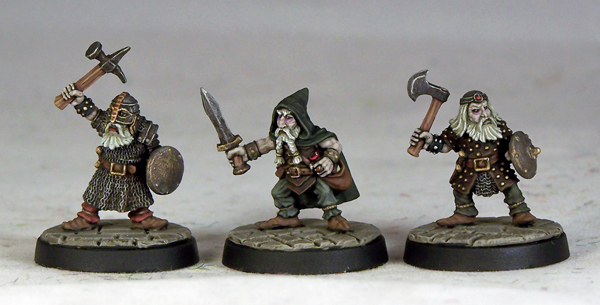
FANTASTIC!
Sorry. What were we talking about? digging up fields around nottingham to find the original Red Redemption moulds or something.
Surely most if not all of the Otherworld Miniatures are Fantastic


Erny
Baron
In the past 4-5 years Richard has had a good chunk of my gaming budget, which I'll admit is flexible. At the same time GW has shrunk to none at all. It may not be much but that money could have gone to GW if better alternatives hadn't been available. I'm certain I'm not the only one whose budget has been placed elsewhere.

treps
Vassal
When you'll find them just send them to me my spincaster is ready for them !Zhu Bajie":2ei974c1 said:Sorry. What were we talking about? digging up fields around nottingham to find the original Red Redemption moulds or something.


dieselmonkey
Lord
Erny":130h139a said:In the past 4-5 years Richard has had a good chunk of my gaming budget, which I'll admit is flexible. At the same time GW has shrunk to none at all. It may not be much but that money could have gone to GW if better alternatives hadn't been available. I'm certain I'm not the only one whose budget has been placed elsewhere.
Conversely, my spend on GW has gone up in the last few years, even though I'm not actually invested in any of their current games. AdMech, Knights, Assorted FW stuff, not to mention my strange obsession with destroying Storm Ravens...

Horace
Serf
Erny":y0c0myly said:The current dwarves from citadel. Not that great....
Yeah, one of the worst of the recent releases modelwise
But its all a very personal taste thing, for me the AoW Dwarfs are actually a lot more characterful than the GW varieties these days. And that's form someone who has only ever owned GW models..
My money has just been directed at ebay instead

Fimm McCool
Lord
Horace":1dirxmrt said:My money has just been directed at ebay instead
Yup. Now if GW had kept offering the Mail Order service it did in the 90s I wouldn't have needed to go fishing in the bay of e...
Although I understand that with the number of moulds, time spent finding them and producing one-off spins and need to remake them every now and again it was probably a financial no-no, on a customer service front though, absolutely brilliant.
stone cold lead
Vassal
Fimm McCool":345zitsa said:Horace":345zitsa said:My money has just been directed at ebay instead
Yup. Now if GW had kept offering the Mail Order service it did in the 90s I wouldn't have needed to go fishing in the bay of e...
Although I understand that with the number of moulds, time spent finding them and producing one-off spins and need to remake them every now and again it was probably a financial no-no, on a customer service front though, absolutely brilliant.
I've probably pissed away thousands buying OOP Citadel stuff on Ebay but I reckon if GW still had all of that stuff in production I'd have only spent a fraction of that. When something is seen as always being available the urgency to buy it just isn't there. I rather liked some of Bob Olley's stuff he initially put out under Olley's Armies and I bought a few bits and pieces eventually. It was only when he had a bit of wobble and decided he was packing it all in (which didn't last long!) that I suddenly found myself ordering a significant amount to avoid missing out should the moulds disappear into obscurity.

Count Von Bruno
Baron
Yeah I went on a splurge when they started phasing out metals- would have picked up more beforehand if I knew.

zoggin-eck
Vassal
stone cold lead":2m69d73m said:I've probably pissed away thousands buying OOP Citadel stuff on Ebay but I reckon if GW still had all of that stuff in production I'd have only spent a fraction of that. When something is seen as always being available the urgency to buy it just isn't there.
Isn't that just the truth though? Great point.
When GW finally stopped Epic (among others) altogether, I was amazed at the outrage and cries of "I was just about to order ten!" regarding the Reaver Titan (perhaps even myself included if I'm honest...). What, we only had twenty something years to buy them new? Kind of like spending years trying to get rid of a spare appliance, giving up and donating to charity. Suddenly everyone "could have used it"
 It is sad whenever a long-serving model like that falls out of production, though.
 There are a good number of models from various companies that I'd freak out about if I knew they were about to stop selling them. If I'm honest though, I think I've regretted, or at least never fully assembled and painted, every panic-buy I've given in to.
treps
Vassal
Just to illustrate what I was saying yesterday, when you see this : https://www.kickstarter.com/projects/lo ... escription I'm sure that a big part, if not all, of the US $800 000 fetched is a direct loss for GW (And don't tell me that this is the price of GW miniatures that is killing the hobby when you see the price of Raging Heroes miniatures). Hobby money is in limited quantity, and when spent on a competitor it's not spent elsewhere.Horace":3dcjtoin said:Not much I would wager. Probably cost themselves more in lawyers fees in all the IP disputes.mbh":3dcjtoin said:I would love to know how much business they lost to copycats over the sat five years.
With their new sales model it will become impossible for companies like RH to compete with GW, their time to market is so long that before they'll have finished designing their proxies for AoS the miniatures will already be out of fashion for the players. Back to the example, their kickstarter finished in late April with an estimated date of shipping for March 2016 (with some reserves to late summer 2016), as always with crowdfunding there will be some delays (from 3 to 9 months), when delivered there will be no more games to use them, as new AoS miniatures will be there with new rules and the number of WFB players will be trending to zero...
I'm sure that this has been a motivation for the new model.
Fimm McCool
Lord
The RH minis are far more beautiful than GW's... but yes, crikey, far too expensive for my tastes! I grant that they strongly resemble GW lines, and with sculpts (yes I know 3d boo hiss) like that I'm not surprised people put ridiculous money into them, but they also strongly resemble most high fantasy games such as MTG and D&D with a strong hint of Manga (Infinity-esque- a look that GW seems to have adopted as well) and computer games like Thief and World of Warcraft. I guess this just proves your point that if GW want something they can claim is uniquely theirs they have to move away from generic fantasy.

Ti Pouchon
Lord
Having perused the AoS rules and army lists, there is one thing I can say with absolute certainty:
There is no way in heck that this rule-set can be used in competitive play.
The sheer amount of insanely 'beardy' and over-the-top combos which can be used in AoS simply means that a competitive "win-at-all-costs"-type of game is rendered impossible. The familiar 'arms race' has gathered up so much speed that two players trying to out-do each other in this field will very, very quickly realize that they might as well just flip a coin to determine the winner and call it quits.
In other words, in order for a game of AoS to work, both players must abandon the competitive mind-set before they even start their game. They actually have to put their heads together to find out what kind of game they'd both like to play. They have to impose limits and strictures upon themselves in order to make the system work the way they want to.
And that, in turn, will lead to games being played with a, well, a story in mind that the players want to tell and take part in. Actually winning the game will take second place to making up the game's story and using our favorite toys to determine the events and outcome of said story.
And yeah, I am perfectly willing to concede their points to all and sundry who chose to disagree with me over this, but this story-driven kind of wargaming is a very crucial part of what I in the comfort of my own head like to call "Oldhammer".
So, I have to say: Kudos to Granny W. for turning the game upon its head; for accelerating the arms race to such an extent that it comes out on the other side.
Oh, and: It has to be said that I really enjoy the fact that I can actually read the rules and the army lists for free. So again, well done, granny.
There is no way in heck that this rule-set can be used in competitive play.
The sheer amount of insanely 'beardy' and over-the-top combos which can be used in AoS simply means that a competitive "win-at-all-costs"-type of game is rendered impossible. The familiar 'arms race' has gathered up so much speed that two players trying to out-do each other in this field will very, very quickly realize that they might as well just flip a coin to determine the winner and call it quits.
In other words, in order for a game of AoS to work, both players must abandon the competitive mind-set before they even start their game. They actually have to put their heads together to find out what kind of game they'd both like to play. They have to impose limits and strictures upon themselves in order to make the system work the way they want to.
And that, in turn, will lead to games being played with a, well, a story in mind that the players want to tell and take part in. Actually winning the game will take second place to making up the game's story and using our favorite toys to determine the events and outcome of said story.
And yeah, I am perfectly willing to concede their points to all and sundry who chose to disagree with me over this, but this story-driven kind of wargaming is a very crucial part of what I in the comfort of my own head like to call "Oldhammer".
So, I have to say: Kudos to Granny W. for turning the game upon its head; for accelerating the arms race to such an extent that it comes out on the other side.
Oh, and: It has to be said that I really enjoy the fact that I can actually read the rules and the army lists for free. So again, well done, granny.
Galadrin
Vassal
So I've had a few days to ruminate on the new rules and come to a few conclusions. Mechanically the game is very poor, but GW is heading in exactly the right direction in terms of the game's spirit. First the good stuff:
1) No points. Others have mentioned this, but it is worth reiterating. Dropping the point system is the single best move GW has taken. It is an elegant way to encourage players to think about the game as a scenario or story first and a competition second. This is a technique used by a lot of old historical wargames and it works extremely well, despite the fact that it is so rarely used in new games these days.
2) Easy rules, faster play. The game is dead simple and although there are special rule exceptions, they are all extremely similar (usually rerolling dice). This is great for casual gamers who want something that plays fast and doesn't require a lot of rules-referencing in the middle of the game.
3) Free. Hopefully this part lasts. Unfortunately, GW has done a "Ravening Hordes"-like freebie version to use old miniatures in new editions for decades now, which is later replaced by (increasingly expensive) rulebooks and army books. While this is more a new game than a new edition, the same principle applies—a quick, free document to use your old models while you wait for new books. If GW sticks with the free-to-play idea, it will be excellent (although considering the fact that they sell $80 iPad apps, including $5-6 painting guides good for only a single model, this is doubtful).
I think these things are definitely in the right "spirit" and ought to be commended. Now, for casual gamers, all this would be enough. This is great for young kids and there are even a lot of adults that enjoy and prefer simpler games. Heck, people shelled out almost $9 million dollars this year for a game of go fish. This type of gamer just wants to roll dice while having a beer with friends and really doesn't care about all the things that game nerds (ahem, game "connoisseurs"!) would rave about.
For the game collector and rules aficionado, the new game is, mechanically speaking, pretty rubbish. It is most definitely the checkers (sorry, "draughts") to Warhammer Fantasy's chess. Firstly, it cuts out the gritty thematic parts. Compare this game, for instance, to the next closest Games Workshop title: Mordheim. In Mordheim, you have rules for slugging enemies over the head with a hammer and giving them a concussion, rules for panicking when you are caught in the streets all alone with no friend in sight, rules for losing an eye or breaking a limb or even being sold to the slave fighting pits. If I flipped through the Mordheim rulebook again and found a rule for slipping on the bloodstained cobblestone after beating an enemy's head in, I would not be terribly surprised. In this new game, however, it is just red pieces vs black pieces. All factions and all moves basically work the same, with very little in the way of thematic rules (perhaps with the exception of the rather silly rules for the special characters, where you have to say something ridiculous at the table to get a small bonus). Rolling the dice and pushing the little men around the table doesn't evoke a gritty (or even half-believable) setting.
In addition to the missing thematic elements, the game mechanics are missing the details ("rules crunch") that would put limitations and strictures upon a player. In Warhammer 3rd Edition, for example, you can only wheel in a certain way, and must pass tests to reform or take turns. The result of this delicate maneuvering is that the battlefield becomes a place of intricate movements and counter-movements. Inevitably, units fail to complete their wheels or turns, leaving them caught in the middle in a terrible position, with the enemy outside of the frontal arc of vision and with flanks threatened. These are limitations that constrain a player's ability to have full control over his or her army, not merely as a factor of dice rolls, but as a factor of their strategy. A good general will not be caught in a position where they have to make overly complicated maneuvers—a good general will force overly complicated maneuvers on their beleaguered opponent! The new game throws such possibilities out the window in favour of a big scrum in the middle of the table.
I think these things make it mechanically a bad game, although, again, there are a ton of people out there that wouldn't mind this at all. A lot of people find chess pretentious (let alone chess with nerdy little elves and goblins) and find checkers to be a better way to spend their time with friends. For that crowd, the spirit of the game is enough. I think those players who want something a little more mechanically stimulating will never be satisfied with this game.
Again, this is all fairly academic. I don't plan on playing this game any. It is just fun to compare it to the best of old Warhammer (3rd edition, in my opinion) and see how very different it is. The other gripes people might have with the rules go into specific concerns that are beyond these general remarks—complaints about the new setting, for example, or the lack of historical influences.
1) No points. Others have mentioned this, but it is worth reiterating. Dropping the point system is the single best move GW has taken. It is an elegant way to encourage players to think about the game as a scenario or story first and a competition second. This is a technique used by a lot of old historical wargames and it works extremely well, despite the fact that it is so rarely used in new games these days.
2) Easy rules, faster play. The game is dead simple and although there are special rule exceptions, they are all extremely similar (usually rerolling dice). This is great for casual gamers who want something that plays fast and doesn't require a lot of rules-referencing in the middle of the game.
3) Free. Hopefully this part lasts. Unfortunately, GW has done a "Ravening Hordes"-like freebie version to use old miniatures in new editions for decades now, which is later replaced by (increasingly expensive) rulebooks and army books. While this is more a new game than a new edition, the same principle applies—a quick, free document to use your old models while you wait for new books. If GW sticks with the free-to-play idea, it will be excellent (although considering the fact that they sell $80 iPad apps, including $5-6 painting guides good for only a single model, this is doubtful).
I think these things are definitely in the right "spirit" and ought to be commended. Now, for casual gamers, all this would be enough. This is great for young kids and there are even a lot of adults that enjoy and prefer simpler games. Heck, people shelled out almost $9 million dollars this year for a game of go fish. This type of gamer just wants to roll dice while having a beer with friends and really doesn't care about all the things that game nerds (ahem, game "connoisseurs"!) would rave about.
For the game collector and rules aficionado, the new game is, mechanically speaking, pretty rubbish. It is most definitely the checkers (sorry, "draughts") to Warhammer Fantasy's chess. Firstly, it cuts out the gritty thematic parts. Compare this game, for instance, to the next closest Games Workshop title: Mordheim. In Mordheim, you have rules for slugging enemies over the head with a hammer and giving them a concussion, rules for panicking when you are caught in the streets all alone with no friend in sight, rules for losing an eye or breaking a limb or even being sold to the slave fighting pits. If I flipped through the Mordheim rulebook again and found a rule for slipping on the bloodstained cobblestone after beating an enemy's head in, I would not be terribly surprised. In this new game, however, it is just red pieces vs black pieces. All factions and all moves basically work the same, with very little in the way of thematic rules (perhaps with the exception of the rather silly rules for the special characters, where you have to say something ridiculous at the table to get a small bonus). Rolling the dice and pushing the little men around the table doesn't evoke a gritty (or even half-believable) setting.
In addition to the missing thematic elements, the game mechanics are missing the details ("rules crunch") that would put limitations and strictures upon a player. In Warhammer 3rd Edition, for example, you can only wheel in a certain way, and must pass tests to reform or take turns. The result of this delicate maneuvering is that the battlefield becomes a place of intricate movements and counter-movements. Inevitably, units fail to complete their wheels or turns, leaving them caught in the middle in a terrible position, with the enemy outside of the frontal arc of vision and with flanks threatened. These are limitations that constrain a player's ability to have full control over his or her army, not merely as a factor of dice rolls, but as a factor of their strategy. A good general will not be caught in a position where they have to make overly complicated maneuvers—a good general will force overly complicated maneuvers on their beleaguered opponent! The new game throws such possibilities out the window in favour of a big scrum in the middle of the table.
I think these things make it mechanically a bad game, although, again, there are a ton of people out there that wouldn't mind this at all. A lot of people find chess pretentious (let alone chess with nerdy little elves and goblins) and find checkers to be a better way to spend their time with friends. For that crowd, the spirit of the game is enough. I think those players who want something a little more mechanically stimulating will never be satisfied with this game.
Again, this is all fairly academic. I don't plan on playing this game any. It is just fun to compare it to the best of old Warhammer (3rd edition, in my opinion) and see how very different it is. The other gripes people might have with the rules go into specific concerns that are beyond these general remarks—complaints about the new setting, for example, or the lack of historical influences.
Galadrin
Vassal
I just had an unrelated thought. I bet this will be a huge boon for Oldhammer mini collectors. The only reason things like Pirazzo's Lost Legion pikemen and Empire greatswords were expensive on eBay is that 8th edition players were buying them for the standard 40-60 model units of 8th edition. Now those units are totally obsolete, which means a lot less buying competition and a lot more people reselling their collections. I bet we are finally going to see the Warhammer eBay bubble pop! That is singularly terrific news for us!
I mean, I suppose you could still have a 60 strong unit of greatswords, but it would have four times the table footprint (close to one and a half square feet), would take 10 minutes to move each model and would be an absolute tarball (since there are no break tests anymore). Actually, that might just break the game... Anyone want to playtest that?
I mean, I suppose you could still have a 60 strong unit of greatswords, but it would have four times the table footprint (close to one and a half square feet), would take 10 minutes to move each model and would be an absolute tarball (since there are no break tests anymore). Actually, that might just break the game... Anyone want to playtest that?
mbh
Vassal
Galadrin":2ple1rsi said:I just had an unrelated thought. I bet this will be a huge boon for Oldhammer mini collectors. The only reason things like Pirazzo's Lost Legion pikemen and Empire greatswords were expensive on eBay is that 8th edition players were buying them for the standard 40-60 model units of 8th edition. Now those units are totally obsolete, which means a lot less buying competition and a lot more people reselling their collections. I bet we are finally going to see the Warhammer eBay bubble pop! That is singularly terrific news for us!
I mean, I suppose you could still have a 60 strong unit of greatswords, but it would have four times the table footprint (close to one and a half square feet), would take 10 minutes to move each model and would be an absolute tarball (since there are no break tests anymore). Actually, that might just break the game... Anyone want to playtest that?
that would be sweet but the oldhammer specific eBay bubble isn't going away.
daddyorchips
Baron
what a pleasure to read reasonable posts about AoS that people have considered and put their opinion across without being dickheads.
I think that killing off WFB is probably for the best. it puts WFB into the hands of the people who love it!
I'm not sure yet about AoS - i haven't read the rules yet, but sensible people seem to think it'll be a fun game, if not a classic.
I like the chaos miniatures very much, but the golden fellas not especially.
i might buy it later this year but if i'm being honest that's unlikely - my only interest in WFB is painting chaos warbands so i'm not really the target audience. if friends of mine get it and play it that might increase the chances though.
I think that killing off WFB is probably for the best. it puts WFB into the hands of the people who love it!
I'm not sure yet about AoS - i haven't read the rules yet, but sensible people seem to think it'll be a fun game, if not a classic.
I like the chaos miniatures very much, but the golden fellas not especially.
i might buy it later this year but if i'm being honest that's unlikely - my only interest in WFB is painting chaos warbands so i'm not really the target audience. if friends of mine get it and play it that might increase the chances though.