Really weird question: Anyone any good with building advice for 1:1 scale walls?

ManicMan

Lord
Okay.. this is kinda NOT miniature or board game related.. but at the same time, kinda and well.. Maybe someone's day job gives a tiny bit of knowledge?

I don't own the home I live in, so major construction work is completely out of it, even if I could afford. The one wall of the house (inside wall.. I would say you have the two side walls (left and right) and this is in the middle dividing a room from a hallway. Anyway.. It's a 1970s build house I believe, and it's a plasterboard or something like that. Kinda a bit weak and hollow.

I think it's kinda impossible but I've been trying to put a couple of shelves up for storing board games.. yeah.. first problem is wallplug/screw doesn't hold it into the wall too well and the weight, even if trying to keep it down to lighter weight stuff doesn't support it. and the plaster appears to get pretty weak around the wall plug point. So I got some hollow wall anchor things (metal, where you screw into the wallplug side and it crunches making an anchor point so it spreads the pressure. I was looking around and building stuff appeared to give this advice.. I kinda got a bit annoyed when trying to do these cause... I decide using a tape measure and stuff, getting the things lined up didn't quite work out and being a couple of mm off really screwed it up... then I found some more stuff saying 'No, these aren't any good for any kinda weight on plaster hollow walls' despite other things saying 'yes, these are perfect for that job'.. and I kinda took one back out of the wall.. which wasn't as hard as it should have been and ended up with a huge hole I had to repair some polyfiller stuff.

sigh.

So... Just randomly though, why not ask if anyone happens to know if there is any bloody way of putting some weight onto a shelve onto such wall. I'm kinda thinking nope, but well, the only people I really know with much experience in the building trade and worth listening to (as the various online forums and stuff which appear to be for experts and people do give completely mixed and contradictory answers) are in fact, in the admin side so have no real knowledge.

but end of the day, I think it's gonna be 'no chance, use a unit' but the reason for shelf is lack of the space for a unit there but there are for some shelves.
 
If you have space for board games shelves, wouldn't a bookcase fit too? Seems like the simplest solution to me. No messing around with specialist fixings/ locating the studs in your wall/ filling the holes if you move out.
 
The plasterboard will not hold the weight, but if you can locate the frames and studs (the wooden structure the plasterboard is fixed to) you can screw into those. Should be 16" apart centre to centre by UK regs. Using 2 supports: a small metal L bracket above the shelf and a long triangular metal or wooden support below will give you some load bearing capacity. You are not going to supporting a full collection of Warhammer rules, expansions and army books on it but a display case of painted figures or such should be OK.
 
There are various different plasterboard fixings, those that go through a large hole and open up at the back tend to have the best strength (e.g. GRIPIT, butterfly toggles, hollow wall anchors - these can be a bit hit or miss as they are easy to bend when installing ). However the fixture will only be as strong as the wall installed on to, so if the plasterboard is very weak the best fixings in the world will not help much.

The best way here is to find the wooden studs; there should be vertical studs spaced evenly (standard here is 400 and 600 mm spaces, but that doesn't always mean the distance between each of them will be one of these...) that the plasterboard is screwed in to; some long heavier duty screws (e.g. 5.0-6.0 mm diameter) can go through in to the centres of these and then you should have a secure fixing.

Hope that helps!
 
If you have space for board games shelves, wouldn't a bookcase fit too? Seems like the simplest solution to me. No messing around with specialist fixings/ locating the studs in your wall/ filling the holes if you move out.
Not really. the Shelves would be above where a Radiator is (well, some gap above). but it would be the simplest. sadly.
The plasterboard will not hold the weight, but if you can locate the frames and studs (the wooden structure the plasterboard is fixed to) you can screw into those. Should be 16" apart centre to centre by UK regs. Using 2 supports: a small metal L bracket above the shelf and a long triangular metal or wooden support below will give you some load bearing capacity. You are not going to supporting a full collection of Warhammer rules, expansions and army books on it but a display case of painted figures or such should be OK.
yeah. Thought It wouldn't really hold weight. finding out where the frame and stuff is a bugger and I'm not sure if them UK regs were the same in the 70s. Though I think there should be something. It's not quite as heavy as a bunch of rulebooks but still some weight (though the screws said that are meant to be good for that but oh well, I think they speak rubbish when they say that at times anyway)
There are various different plasterboard fixings, those that go through a large hole and open up at the back tend to have the best strength (e.g. GRIPIT, butterfly toggles, hollow wall anchors - these can be a bit hit or miss as they are easy to bend when installing ). However the fixture will only be as strong as the wall installed on to, so if the plasterboard is very weak the best fixings in the world will not help much.

The best way here is to find the wooden studs; there should be vertical studs spaced evenly (standard here is 400 and 600 mm spaces, but that doesn't always mean the distance between each of them will be one of these...) that the plasterboard is screwed in to; some long heavier duty screws (e.g. 5.0-6.0 mm diameter) can go through in to the centres of these and then you should have a secure fixing.

Hope that helps!
yep, claim Fine for the wall but doesn't mean much if the wall is crap.

Thanks ^_^ I'm not really gonna buy one of these 'stud locators' and drilling a bunch of holes to find one is ... iffy (cause you end up with a bunch of holes and I'm not sure how much decent enough filler I got compared to the stuff I use for terrain when I do that). wonder how easy it would be to try to figure out where the bracket/stud things are... I'm sure at one point you were meant to be able to get access to some building plans but I think such days are long gone,
 
Yeah, even judging where they should be is no guarantee they been done correctly. A stud finder is almost necessary here, otherwise a lot of luck or a lot of holes! Best of luck with whatever you choose to do.
 
My advice, as an older (definitively) & wiser (perhaps) bodger, is to get a competent friend or relative to do the job or pay a handyman to put 'em up for you.
 
Magnets can sometimes be used as studfinders - they'll be attracted to the nails used to assemble the wall frame. Not a sure thing by any means, but it's cheaper than buying a Stud Finder.

I think Citizen Sade might have the best advice, though.
 
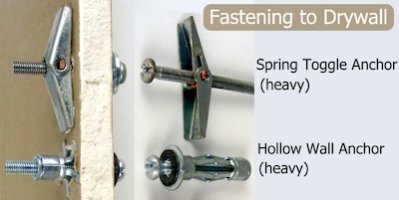
As others have said ideally you want to be going into the studs with the fixings, but if you can't find them the only option are various cavity wall fixings. Of those the only things that are going to be even moderately acceptable for any weight are either toggle bolts or cavity wall anchors (also called intersets or molly bolts). Toggle bolts are mildly annoying as you can't undo them without loosing the toggle into the cavity (okay there is a trick you can do), the anchors fix into the wall essentially putting a permanent nut into the wall. Removing them is not always a tidy job. Here is a picture pinched that shows those two fixings, in "drywall" as our American friends would say.

image170-224904803.jpg

In either case the chief pain with using such fixings is getting the alignment spot on with whatever you are fixing - unlike just screwing through something and into the timber stud in the wall behind. You have a little more give with the spring toggles since the hole you have to drill needs to be large enough to get the toggle through. Personally I prefer wall anchors, despite the need for accuracy they are generally neater I think and that's what I use on the few stud walls we have in our house. You do however ideally need a special tool for fixing them in place, but the cheap ones are £5-7 and perfectly serviceable if combined with suitable offerings to the Chaos powers.

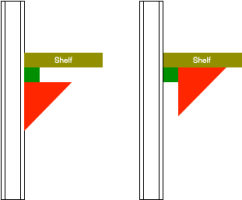
If I were doing a shelf that I was expecting to put some moderate load on I'd probably fasten a horizontal batten to the wall to run the full length of the shelf at the back, that would allow me to anchor it in several places and spread the load evenly along the wall. The only issue with that is that it then makes fixing some shelf brackets more of a pain and you'd have to pack out the bracket somewhere unless you were making your own from timber. ie you can see you either need to pack out under the shelf or pack out the wall.

shelf.png

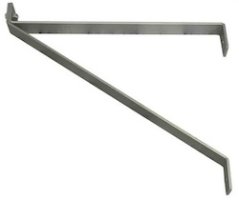
One advantage of packing the wall is you can give yourself something solid to fix to! However it probably looks less polished. You could run a shorter batten to avoid that issue if your shelf only needs brackets at either end, or run several battens if it needs some central support. If packing the shelf isn't really a good look then one bracket solution would be Greenhouse shelving brackets. These tend not to have a solid "L" shape they more often look like this:

576305_1-1191525927.jpg

You could therefore notch the back of the batten to accommodate the top basket and replace the front bolt that joins the two pieces together with a nice screw into the shelf front. So from above you'd have a batten that looked like this to accommodate the bracket:

planview.png

I'd also be screwing the shelf down into the batten. I'd probably look to support anything every 50-60 cm at most in this case (or 40cm if you can find the studs).

It's worth noting that some walls are built with metal stud work, much more common in offices than homes however. Whilst you can kinda put self tapping screws into metal studs they are not exactly solid. However the odds of you having metal stud work are vanishingly small. Somewhere in that wall will be some studs, as mentioned above a decent magnet is one way of trying to locate them - then you can measure out to estimate where the others are and can always drill a small test hole and see if you hit wood.

The only other thing to note in a house where you've not done the building - wires. Yes they are supposed to be within the zones (generally horizontal and vertical bands extending out from sockets/switches or within ~20cm of the edges of rooms, but well, life isn't always perfect and I've seen wires run diagonally across walls and plenty run up studs where you'd have no indication there is a cable. That is where a decent-ish stud finder is useful since they will have an AC detection mode. However most stud finders are a bit meh at best, mine wasn't cheap and isn't stunning and the only one I've ever used that was at all reasonable was a fortune.

And pipes - someone is bound to have run a water pipe or the central heating pipes exactly where you're going to drill through ...

Like all things if you've done it several times before and have all the tools and fixings to hand it's not fundamentally a hard job, but if you don't I quite accept it's rather a pain.

It sounds like you might already have "the shelves", what sizes are they, or are they available online somewhere to have a look at?

A final option is to consider what you might be able to do with butchering a book shelf or other random bit of IKEA type furniture into something that worked with the radiator. There are whole forums out there dedicated to "hacking" such furniture!
 
Last edited:
yeah, the ones I got are molly bolts.. can't remember the exact type for a picture (I put them.. erm.. someplace handy.. so might take a while to find them ^_^; though I haven't REALLY looked yet) which go in, you then screw to extend the 4 clips inside. The spring type I ignored cause I couldn't see how they were meant to work.. you would need to be able to get INSIDE the hollow wall.. which if you could do that, you don't have the problem of the hollow wall really..

I didn't think about bracing it with a beam on the outside.. odd since that is how the .. erm.. what were them shelve units which you put up a couple of metal rails and then attach the brackets to that rail called? probably just call them a rail shelving thing... it's stupid what things have names but are never used.

yeah, I know the wires can be a problem but this wall kinda should be okay but I do try to keep a note on some things where I think there might be.. but then it's pretty tricky to 'know'
 
I didn't think about bracing it with a beam on the outside.. odd since that is how the .. erm.. what were them shelve units which you put up a couple of metal rails and then attach the brackets to that rail called? probably just call them a rail shelving thing... it's stupid what things have names but are never used.
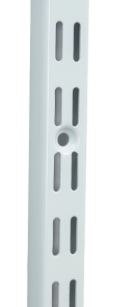
Twin slot shelving.
slot.png

I did wonder about suggesting that - if you can find the studs perfect, since you're fixing a lovely long pice of metal to the wall they provide a good solid anchor. Not the most beautiful in a living room of course! However very simple and flexible and you can get the fixings in several colours.
If you don't mind them then it's a good solution and solid. Ideally fix the track on the studs with wood screws, but Molly bolts would probably work (although the assumption is normally countersunk screws) into the cavity, just check how the heads look in the holes and if they are proud you might not get a shelf against one. Once you've done the first mounting point you can pop the twin slot track up on that one and use it to mark all the other mounting holes rather than measuring. Obviously spirit level, etc to make sure it's nice and vertical!
then screw to extend the 4 clips inside.
That's the bit where the setting tool comes into play - you do that before you try to screw it. Fixing them without a setting tool is a little hit and miss you absolutely need a turning stop between the bolt head and the nut otherwise it'll tend to just spin in the wall (any old bit of metal plate with a suitable hole in will do - have a look at a few videos and you'll see the various techniques). Worth noting with Molly bolts you do need to make sure you have the correct size bolt - the depth of the collar needs to match the depth of the plasterboard
The spring type I ignored cause I couldn't see how they were meant to work..
It's as dumb as you might thing - you just drill a large enough to poke the collapsed sprung bit through, it has to stay on the bolt of course so your fixing needs already be on the bolt prior to the poking - so they are only really useful with some types of fixing that are practical to have on the bolt and will cover the almighty hole you just drilled to get the toggle through the wall. They do carry a good load however.
 
If you're looking to fasten something into drywall, I've found Toggler Snaptoggles to be an absolute godsend. (And they seem to be available in the UK, if the link is any indication.) They're a whale of a lot easier to use than traditional butterfly style toggle bolts, since the plastic strips hold the toggle securely in the wall until you can get the bolt started. (No dropping the toggle into the wall with clumsy fingers. And the hole required doesn't feel quite as large to me.) Anyway, the video pretty well explains it, and they will hold quite a lot. Great little devices, worth every penny.
 
Those look rather neat. That's pretty similar to the only way you can get a conventional toggle out of a wall and not loose it - flip it so it's lying along the bolt, but it's a bit of a fiddle.

So speaking of 1:1 shelving my garage shelves are looking like something from the modern world of GW at present ...

skulls-for-the-skull-god.jpg

More skulls! (Prep for the end of the month continues apace!)
 
@symphonicpoet the things I got appear to be good and claim self setting or something but I think end of the day, the wall itself is a problem.. but always good to hear about more things cause, well, even if things aren't useful for me, there is sure to be someone that might find this thread and find stuff of interest. Really annoys me when I'm trying to figure out a problem, find a forum post where someone had the same problem, but then they just posted 'fixed it' and didn't say how or anything. really annoying.

@Eric
wonder what you have been hunting.. some of them clearly aren't human.. maybe Doctor Knox knows ^_^
 
Back
Top